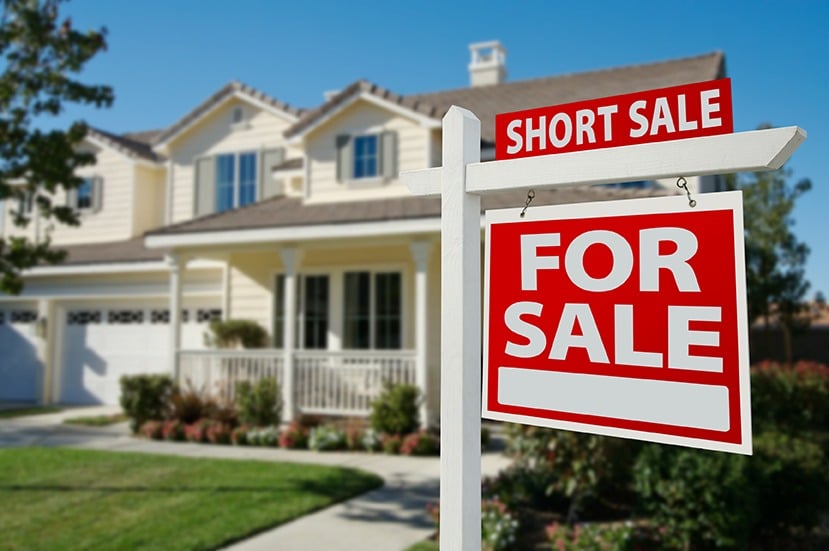
An Expert's Guide to Short Sales for Chicagoland Homeowners
More and more Illinois homeowners are finding themselves trapped in homes that are underwater - meaning they owe more on their mortgages than their properties are worth. This unfortunate reality stems from the combination of falling home values, job loss or reduced income, and adjustable-rate mortgages with spiking payments.
If you're in this difficult situation, you may feel like you have no choice but to default on your loan and go into foreclosure. But there is another option that can help you avoid foreclosure and its severe credit consequences: a short sale. Here's what Chicagoland homeowners need to know about how short sales work and whether this strategic process could be the right move for you.
A short sale allows a financially distressed homeowner to sell their property for less than the amount owed on the mortgage. To begin the process, you will request approval for a short sale from your mortgage lender. The lender will typically agree to a short sale only if the home is not worth as much as the remaining mortgage balance due to declining property values.
If the lender approves the short sale, you can then list and sell the home through a real estate agent just like a normal transaction. When you get an offer, the buyer will know upfront that it is a short sale and the lender has approved a sale below the mortgage balance.
The proceeds from the home sale go to pay off part or all of the mortgage. If the sale amount doesn't fully cover the remaining loan balance, the lender has to eat the difference, which is known as a deficiency. The lender's approval of a short sale hinges on not holding the homeowner responsible for that deficiency.
The main benefit of a short sale over foreclosure is that it helps you avoid severe credit damage. A foreclosure can remain on your credit report for up to 7 years and can drop your credit score as much as 200 points or more. Lenders also tend to view a past foreclosure as a red flag that makes you a high-risk borrower.
With a short sale, any missed mortgage payments will still count against your credit. But the delinquency period is generally shorter than with a foreclosure. And you avoid having an actual foreclosure on your record.
For FHA loans, borrowers may qualify for a new FHA-insured mortgage just one year after a short sale, versus needing to wait three years after a foreclosure. Short sales may also have tax benefits, as any amount of loan deficiency waived by the lender is non-taxable for federal income tax purposes.
If you want to pursue a short sale for your Illinois home, there are some important guidelines to know:
While a short sale is preferable to foreclosure, it still involves the difficult process of having to sell your home for less than you paid and owe. It also won't save your credit from all negative impacts. Here are some key downsides to weigh:
Homeowners cannot actually make a profit from a short sale. Some buyers may offer an above-market price in hopes that if approved, the excess funds above the mortgage balance can go to the struggling seller. However, lenders will veto a sale if the price allows the homeowner to walk away with cash. Any surplus instead goes to the lender to reduce the deficiency.
In some cases, yes - a short sale can increase your income tax obligation. The key factor is cancellation of debt, also called COD income. If your lender writes off any part of the remaining mortgage balance not covered by the sale proceeds, that cancelled debt gets reported to the IRS as taxable income on Form 1099-C.
You will owe income tax on the cancelled amount unless you qualify for the IRS exclusion for insolvency. This applies only if your debts exceed your total assets. You can reduce COD income by any amount you paid the lender as a deficiency balance after the sale.
When a lender approves a short sale with a loan balance reduction, the borrower may have to give the lender up to 10% of any future appreciation of the home. So if you short sell your Chicago home for $250,000 when you owe $300,000, the lender eats a $50,000 loss.
But as a condition of approving the sale, the contract may state that you now owe the lender 10% of any appreciation if you buy the house back in the future. Say you re-purchase that home later for $350,000. You would owe the lender 10% of the $100,000 increase in value, or $10,000.
This recapture provision lasts for 5 to 10 years. It ensures the lender can recoup some of its losses if the borrower later profits from the property.
While the lender has to absorb the deficiency balance, the homeowner is still responsible for all the closing costs in a short sale. Your obligations as the seller include:
You cannot deduct short sale closing costs as home sale expenses for tax purposes. And you cannot use sales proceeds to pay real estate agents. Any commissions must be paid from your other funds.
If you have experienced financial hardship such as a job loss, divorce, or health crisis that makes keeping up with your mortgage impossible, a short sale can help you transition out of homeownership without the full blow of a foreclosure. Consult with a trusted real estate attorney or housing counselor to weigh the pros and cons versus other alternatives like mortgage forbearance, loan modification, or deed in lieu of foreclosure.
With the right advisor support to negotiate with your lender, a short sale can be the most strategic option to avoid foreclosure credit damage and regain your financial stability. Though the home selling process takes time and effort, you can move forward without the albatross of a foreclosed home anchoring down your credit and finances. There is life - and even homeownership again - on the other side.
Please contact Certified Short Sale agent, Teresa Ryan, for expert guidance.
Whether you’re ready to buy your next home or considering selling your current one, we’re here to help. Complete the form below, and a member of our team will be in touch shortly to answer your questions and help you take the next step.
Work with a team backed by 25+ years of local experience, proven results, and a genuine commitment to every client relationship.

RYAN HILL GROUP
ADDRESS 1288 RICKERT DR STE 300 NAPERVILLE, IL 60540